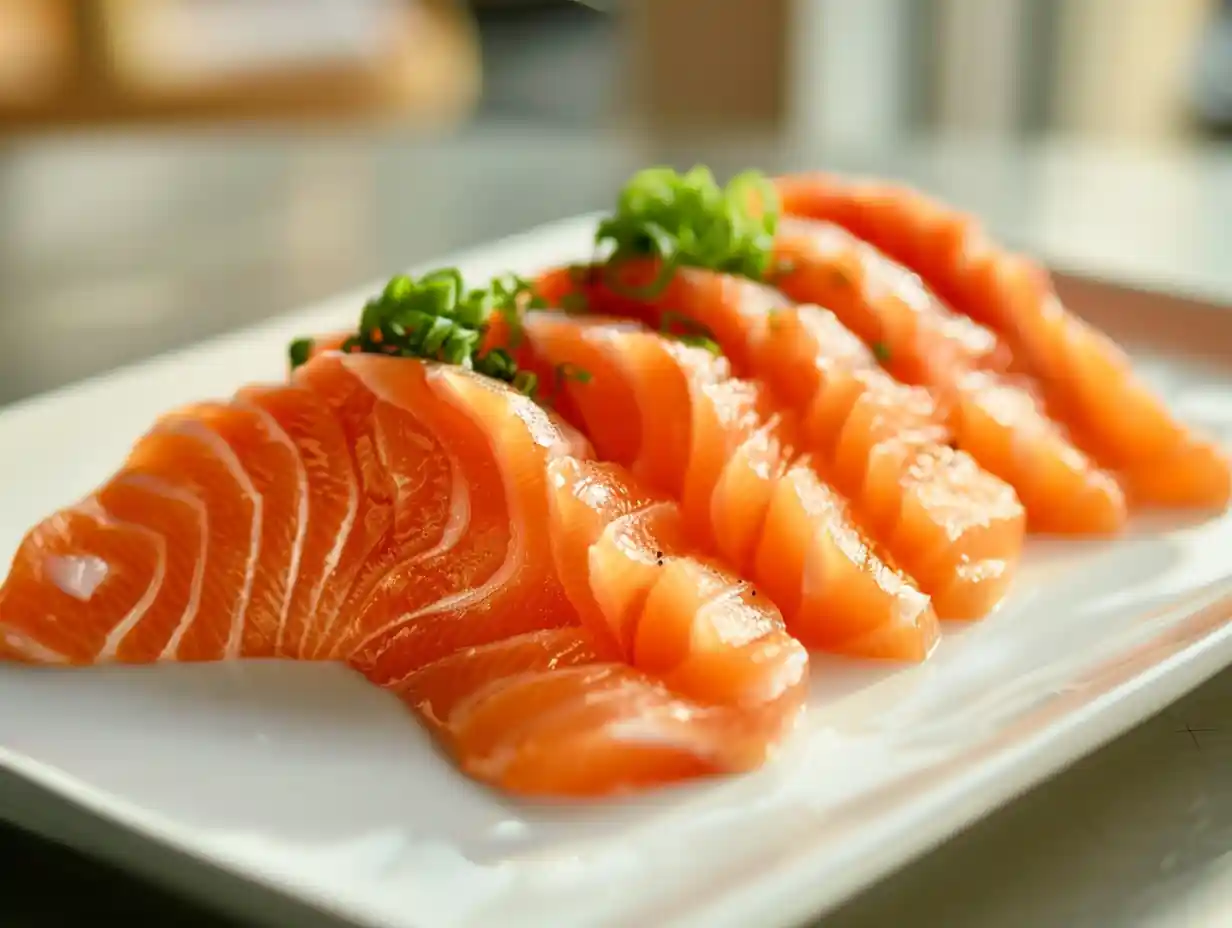
Salmon Sashimi – The Ultimate Homemade Recipe for Fresh, Safe, and Flavorful Japanese Delight

Salmon sashimi is my ultimate comfort food clean, buttery, and full of flavor. I used to think it was too risky to make at home, but as a lifelong cook and dad of two, I’ve learned that great food doesn’t need a restaurant.
Hi, I’m Matt. My love for cooking began in my grandfather’s kitchen, where simple meals meant love and family. Now, that same passion guides how I prepare salmon sashimi safe, fresh, and easy to make in your own kitchen.
You’ll find the recipe card just below, and after that, plenty of helpful details you don’t want to miss they’ll make your homemade salmon sashimi taste unforgettable.
Jump To:
Table of Contents
Salmon Sashimi – 4 Easy Ways to Slice Like a Chef
Author: Matt – My Dinner Ideas
Servings: 4 people
Prep Time: 10 minutes
Freeze Time: 7 days
Cook Time: 0 minutes
Course: Appetizer
Cuisine: Japanese
Difficulty: Easy
🔧 Equipment
- 🔪 Sharp fillet or sashimi knife (preferably yanagiba-style)
- 🧊 Freezer-safe bag or vacuum-sealed bag
- 📏 Cutting board with non-slip base
- 🧻 Paper towel
- 🌡️ Kitchen thermometer (-4°F / -20°C)
🧂 Ingredients
- 🐟 1 lb fresh farmed salmon (Faroe Island or Norwegian, sashimi-grade)
- 🧂 1 tsp salt (per pound of salmon)
- 🍋 Optional: yuzu aioli (mix olive oil & yuzu hot sauce)
- 🥑 Optional: lemon, avocado, or cucumber for serving
- 🥢 To taste: soy sauce & wasabi
👨🍳 Instructions
- Buy sashimi-grade salmon from a trusted fishmonger.
- Pat dry with a paper towel, sprinkle salt, and let sit for 20 minutes.
- Rinse, dry again, and place in a freezer-safe bag.
- Freeze for at least 7 days at –4°F (–20°C) to kill parasites.
- Thaw in the refrigerator overnight before slicing.
- Use a sharp knife to cut thin slices against the grain.
- Serve chilled with soy sauce, wasabi, or yuzu aioli.
💬 Notes
- Always freeze salmon to make it safe for raw consumption.
- Use only sashimi-grade fish from a verified source.
- Consume within 24 hours of thawing.
💪 Nutrition Facts (per serving)
| Calories | 161 kcal |
| Protein | 22 g |
| Fat | 7 g |
| Cholesterol | 62 mg |
| Sodium | 631 mg |
| Vitamin D | 13 mcg |
| Iron | 1 mg |
Choosing the Right Salmon for Sashimi
What “Sushi Grade” Really Means
When making salmon sashimi at home, safety starts long before the slicing. “Sushi grade” doesn’t mean a special type of fish it means salmon that’s been frozen to kill parasites, making it safe to eat raw. Always buy your fish from a trusted fishmonger or market that labels its salmon for raw consumption. Avoid typical grocery counters where freshness can’t be guaranteed.
The fish should smell like the ocean, not “fishy.” Look for vibrant orange color, firm texture, and clear, moist skin. I use sustainably farmed Faroe Island salmon, known for clean waters and strict handling standards. Once home, freeze it at –4°F (–20°C) for at least seven days. That’s the same process sushi restaurants use to make salmon sashimi safe.
Farmed vs. Wild Salmon
Many people assume wild salmon is safer, but that’s not always true. Farmed salmon from reputable sources is often more consistent, fattier, and better suited for sashimi. Wild salmon may carry parasites or lack traceability. Choose the one you trust most knowing its source is key.
When you’re not in the mood for raw fish, try the Mediterranean Salmon Recipe. It’s a warm, herby alternative that reminds me of my grandfather’s simple yet flavorful cooking the same passion that inspired me to share how easy and safe salmon sashimi can be at home.
Preparing Salmon for Sashimi
Cleaning and Salting the Salmon
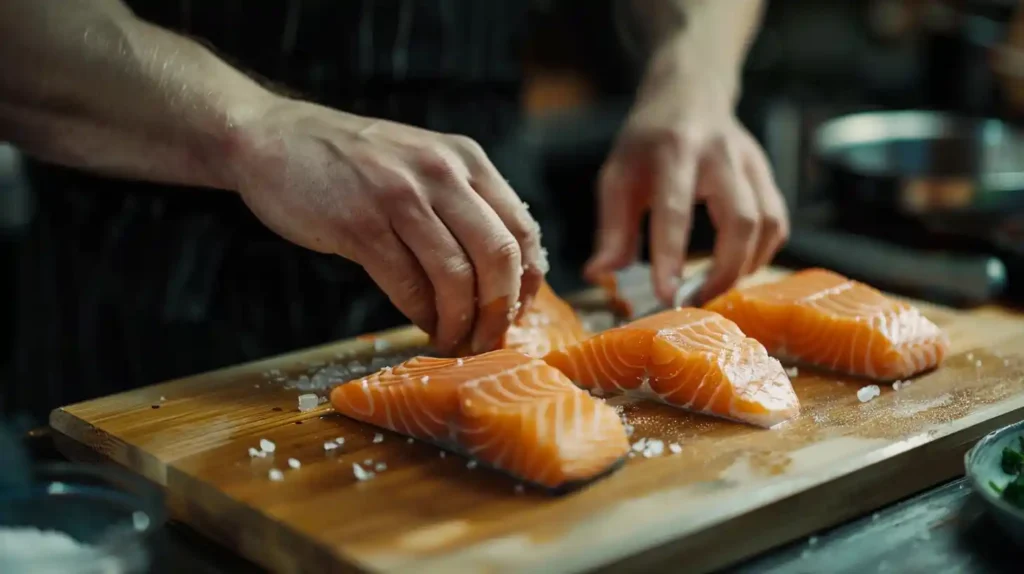
Once you’ve chosen high-quality salmon, preparation is everything. Start by patting your salmon dry with a paper towel to remove moisture this helps the salt penetrate evenly. Sprinkle 1 teaspoon of salt per pound of salmon and let it sit for about 20 minutes. You’ll notice water beginning to rise to the surface; that’s a good sign the salt is drawing out impurities. Rinse the fish gently with cold running water and pat dry again. Clean handling at this stage keeps your salmon sashimi fresh and delicate.
I learned this careful salting method while helping in my grandfather’s kitchen, where we respected each ingredient as if it were the last one we’d ever cook. It’s a simple but powerful ritual that transforms a raw fillet into something truly special.
Freezing for Safety
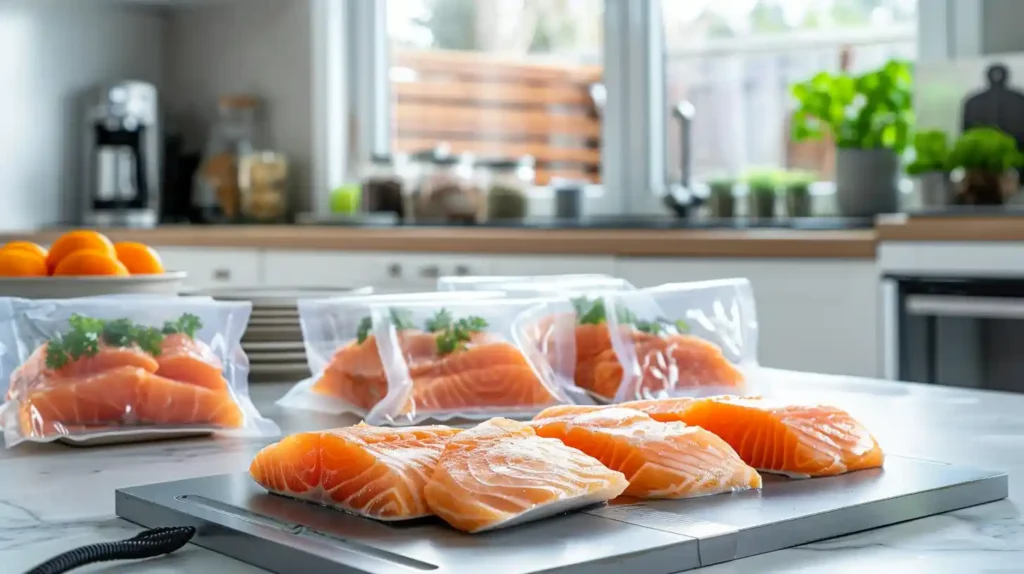
To make your salmon sashimi safe to eat raw, freeze it for at least seven days at –4°F (–20°C) or for up to a month. This process kills parasites and preserves freshness without altering flavor. Once frozen, store it in a zip-lock freezer bag to avoid freezer burn. When you’re ready to serve, defrost the salmon overnight in the fridge.
For another refreshing seafood idea, try my Steamed Salmon Recipe. It’s proof that whether hot or cold, salmon’s beauty lies in its simplicity the same spirit behind every perfect slice of homemade salmon sashimi.
Slicing Salmon Sashimi Like a Pro
The Right Knife and Technique
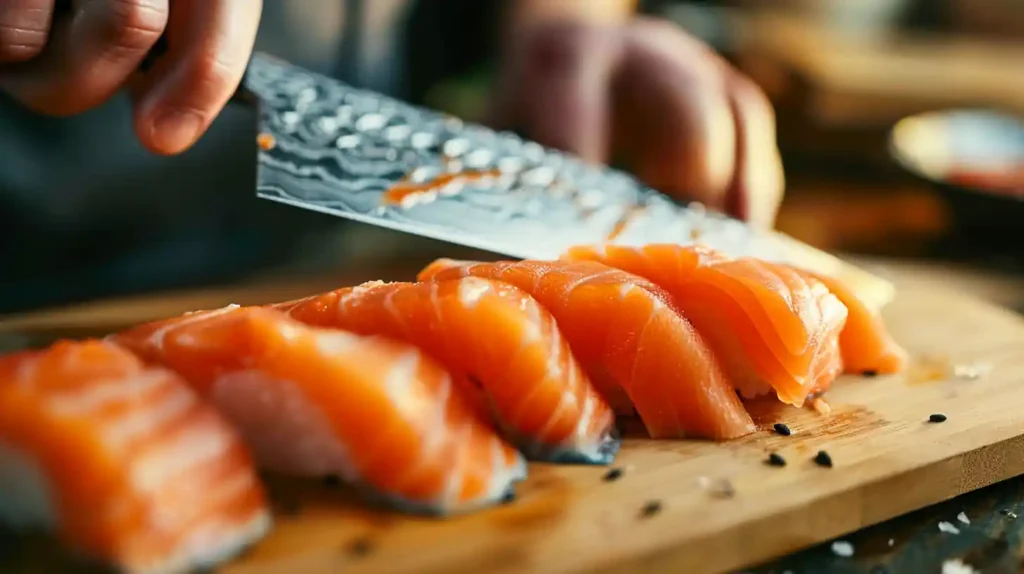
Cutting salmon sashimi is more art than task. The key is precision each slice should glide like silk, not tear. Use a long, sharp sashimi or fillet knife, ideally a yanagiba-style blade, which allows you to make clean, single strokes. Never saw back and forth; instead, pull the knife toward you in one smooth motion.
Lay the salmon fillet on a cutting board, skin side down, and trim any dark flesh or uneven edges. Then slice across the grain into pieces about ¼ inch thick. This ensures that each bite has the perfect balance of tenderness and texture. Keep your knife slightly wet to prevent sticking and preserve the salmon’s shine.
I still remember learning this motion from my grandfather, his hands steady as mine trembled beside him. He always said, “A sharp knife shows respect for your ingredients.” That phrase echoes every time I prepare salmon sashimi at home.
Presentation Matters
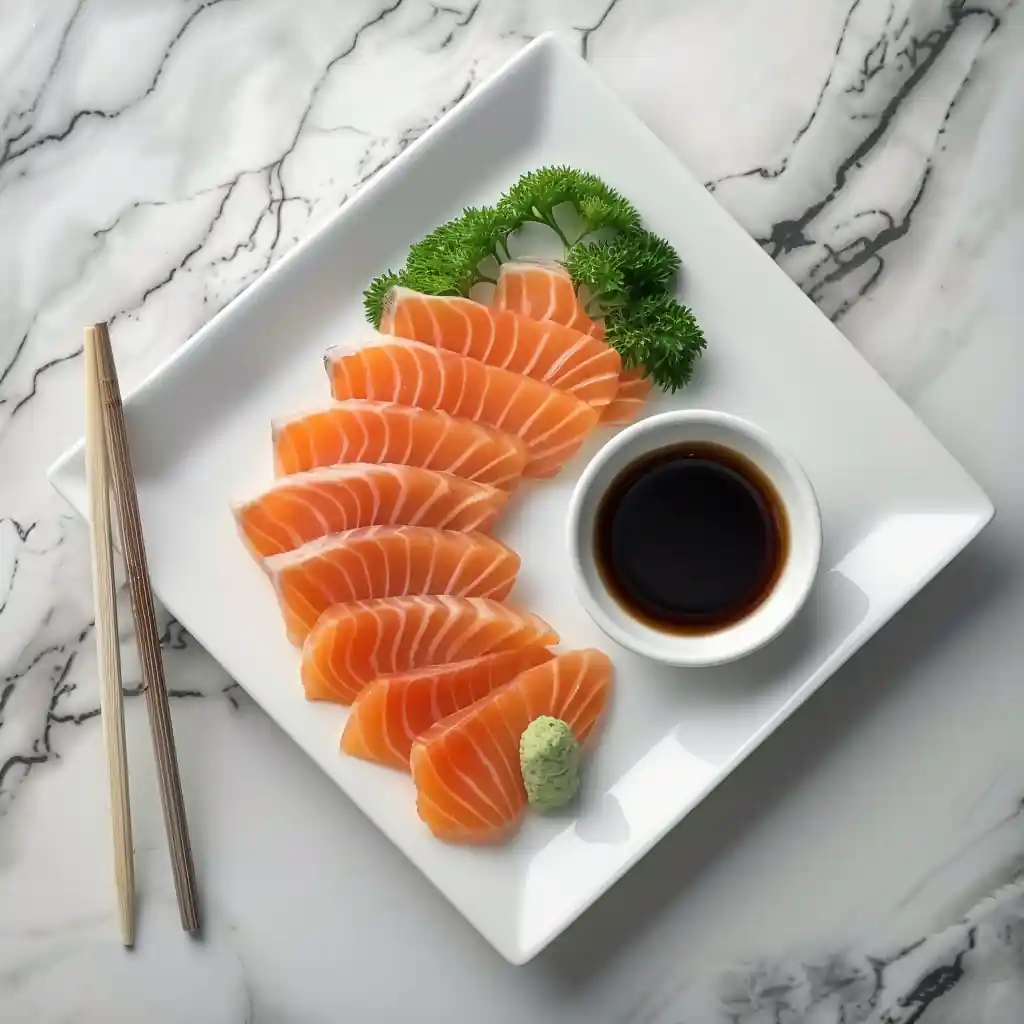
The beauty of salmon sashimi lies in its simplicity no complicated garnishes, just balance. Arrange the slices slightly overlapping, fanning out like flower petals. A touch of lemon, grated daikon, or thin cucumber adds color without overpowering the flavor. Serve chilled, not cold, so the buttery texture shines.
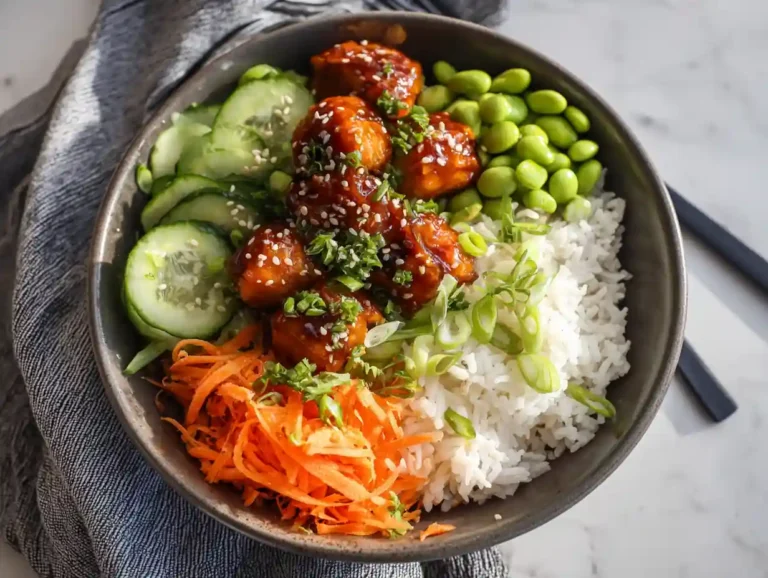
When you’re craving something equally beautiful yet comforting, try this Salmon Bowl Recipe. It captures the same freshness of sashimi but with warm rice and savory sauce perfect for sushi night at home.
Serving and Pairing Salmon Sashimi
Classic Pairings for the Perfect Bite
Serving salmon sashimi is all about contrast rich, buttery fish balanced with sharp, bright flavors. The essentials never change: soy sauce, a touch of wasabi, and pickled ginger. The saltiness of soy sauce brings out the salmon’s natural sweetness, while wasabi adds that short-lived heat that cleanses the palate.
For a subtle twist, mix soy sauce with a few drops of yuzu juice or lemon for a citrusy lift. I often pair salmon sashimi with thin slices of avocado and cucumber, both of which add freshness and balance. And don’t forget presentation use a chilled plate or slate board, so the fish stays cool but not icy.
At home, I like to serve my sashimi alongside warm sushi rice, letting the slightly vinegared grains complement the raw salmon’s texture perfectly.
Drinks and Dipping Sauces
A good drink can elevate salmon sashimi from simple to unforgettable. A crisp sake, dry white wine, or even sparkling water pairs beautifully. For dipping sauces, experiment beyond soy try a yuzu aioli made with olive oil and a hint of hot sauce for a creamy, citrus finish.
When you want a savory Japanese-inspired dinner to follow, my Teriyaki Salmon Recipe makes a wonderful hot complement to your sashimi platter. The sweet-salty glaze and tender fish echo the same harmony of flavor that defines a perfect piece of salmon sashimi.
Flavor Variations and Creative Twists
Adding a Touch of Citrus or Heat
Once you’ve mastered the basics, it’s fun to experiment with subtle ways to enhance your sashimi experience. A few drops of yuzu or lemon over the slices can brighten the flavor and cut through the richness of the fish. If you prefer a little spice, try a small drizzle of chili oil or sriracha mayo on the side. These additions bring balance without hiding the salmon’s delicate taste.
I sometimes prepare a yuzu aioli, mixing olive oil, yuzu hot sauce, and a pinch of salt. It’s creamy, tangy, and ideal for dipping. Just remember simplicity wins. Too many sauces can drown the clean, buttery flavor that makes sashimi special.
Fusion-Inspired Ideas
While traditional salmon sashimi is unbeatable, there’s room for creativity. You can top each slice with thin avocado, sesame seeds, or finely chopped green onions. Another twist I love is serving sashimi over sushi rice with a splash of soy and nori strips almost like a mini poke bowl.
Cooking for friends? Arrange sashimi on a platter with small dishes of different condiments so everyone can customize their flavor. It’s interactive, colorful, and elegant.
If you want a heartier dish inspired by the same freshness, try my Sushi Bake Recipe (Salmon). It transforms those bright sashimi flavors into a warm, comforting casserole the perfect bridge between tradition and creativity.
Storing and Handling Leftover Salmon
Keeping Salmon Fresh After Slicing
Once you’ve prepared your sashimi, freshness becomes the priority. Ideally, salmon sashimi should be eaten the same day it’s sliced. If you need to store leftovers, wrap each piece tightly in plastic wrap, then place it in an airtight container to prevent oxidation and odor absorption. Keep it in the coldest part of your refrigerator, but for no longer than 24 hours.
Avoid refreezing the fish once it’s thawed doing so can ruin its texture and increase bacteria risk. I always portion my salmon before freezing so I only defrost what I need for each meal. That small step keeps every sashimi night fresh and safe.
Using Leftovers Creatively
If you have extra salmon that’s already been thawed, consider transforming it instead of eating it raw again. Lightly sear it on both sides to make salmon tataki, or chop it up for a quick rice bowl with soy, sesame oil, and scallions. You can even fry the leftover salmon skin until crispy it makes a fantastic snack that my kids can’t get enough of.
On cooler days, I love using those bits in my Smoked Salmon Chowder Recipe. It’s a cozy way to enjoy the same fish in a cooked, comforting form while staying true to the ingredient’s clean flavor and quality.
Nutrition Facts and Health Benefits
Why Salmon Sashimi Is a Smart Choice
Salmon sashimi isn’t just delicious it’s packed with nutrients your body loves. A standard 3-ounce serving provides around 160 calories, 22 grams of protein, and healthy fats that support brain and heart health. Those omega-3 fatty acids help reduce inflammation, improve focus, and boost overall cardiovascular function.
Unlike fried or heavily seasoned dishes, salmon sashimi keeps things pure and clean. With no added oils or carbs, it’s naturally low in calories but incredibly satisfying. The protein helps with muscle recovery, while vitamin D and selenium strengthen immunity. It’s one of those meals that feels indulgent but fits perfectly into a healthy lifestyle.
Clean Eating, Simplified
When I first started making salmon sashimi at home, I was amazed by how light yet filling it felt. A few slices with rice or vegetables leave you energized instead of sluggish. This makes it perfect for quick lunches or balanced dinners when you want something nourishing but uncomplicated.
Just remember: quality matters. The better the salmon, the more nutrients you preserve through careful handling and freezing.
For a lighter cooked option with similar benefits, try my Steamed Shrimp Recipe. It’s equally gentle, fresh, and packed with lean protein a great complement to your sashimi nights.
Eating well doesn’t mean giving up flavor; it just means choosing ingredients that love you back and few do that better than salmon sashimi.
Common Mistakes and How to Avoid Them
Rushing the Freezing Process
One of the biggest mistakes home cooks make when preparing salmon sashimi is skipping or shortening the freezing time. Even if your salmon looks fresh, it must be frozen for at least seven full days at –4°F (–20°C) to eliminate parasites safely. Anything less is risky. I’ve seen people freeze for just two days, thinking it’s enough it’s not. Proper freezing is what makes sashimi safe to eat at home.
Also, never freeze fish that’s already been sitting in the fridge for days. Always start with freshly bought salmon. The quality you begin with determines the taste and safety of the final dish.
Using the Wrong Knife or Cutting Technique
Another common error is using a dull or serrated knife. This tears the delicate flesh, ruining the clean lines that make sashimi visually stunning. Keep your knife sharp and your strokes smooth. Remember: one confident motion beats several hesitant ones.
Avoid cutting the salmon while it’s still frozen or too cold let it rest for a few minutes in the fridge before slicing. That’s the secret to those thin, even pieces that melt in your mouth.
If you’d like to see another elegant seafood recipe with perfect texture, try my Asian Salmon Recipe. Its balanced seasoning and tender bite reflect the same precision you’ll want in every salmon sashimi slice you make.

FAQ About Salmon Sashimi
How to cut salmon sashimi?
To cut salmon sashimi properly, use a long, razor-sharp knife ideally a yanagiba or fillet knife. Place the salmon fillet skin-side down on a clean board, then slice against the grain in one smooth motion. Each piece should be about ¼ inch thick. Avoid sawing back and forth; instead, let the knife glide in a single pull to keep the flesh smooth and glossy. Wetting the blade between cuts helps prevent sticking. The key is patience and precision each slice should melt in your mouth, not crumble on the plate.
How to make salmon sashimi?
Making salmon sashimi at home starts with sourcing quality fish. Buy sashimi-grade salmon from a trusted fishmonger or market. Pat it dry, sprinkle salt, let it rest for 20 minutes, rinse, then freeze for at least seven days at –4°F (–20°C) to ensure safety. Thaw in the fridge overnight before slicing. Serve chilled with soy sauce, wasabi, and pickled ginger for authentic Japanese flavor. For a modern twist, try pairing it with citrusy yuzu sauce or a touch of sesame oil.
If you love clean flavors with a cooked option, you’ll enjoy the Steamed Salmon Recipe a warm, delicate dish that complements sashimi perfectly.
Salmon sashimi calories
A 3-ounce serving of salmon sashimi contains about 160 calories, with 22 grams of protein and 7 grams of healthy fat. It’s rich in omega-3 fatty acids, vitamin D, and selenium, making it both nutritious and satisfying. Because it’s raw and unprocessed, it’s naturally low in carbohydrates and high in clean energy. It’s one of the healthiest ways to enjoy salmon light, filling, and full of flavor.
When you’re craving something equally fresh but slightly heartier, try the Salmon Bowl Recipe. It carries the same bright taste of sashimi with the comfort of warm rice and vegetables perfect for a quick, wholesome dinner.
Is Costco salmon safe for sashimi?
Yes Costco farmed Atlantic salmon is often safe for sashimi if it has been previously frozen to kill parasites. Most of Costco’s salmon is sourced from Norwegian farms that meet strict freezing and safety standards. Always confirm the label says “frozen for raw consumption” or “sushi grade.” Even so, it’s smart to freeze it again at home for seven days at –4°F (–20°C) to ensure maximum safety before slicing.
Can I eat raw salmon from the grocery store?
Not always. Most grocery store salmon isn’t handled or frozen under conditions safe for raw eating. Regular salmon might contain parasites if it hasn’t been deep-frozen. Only fish labeled “sashimi grade” or “sushi grade” should be used for raw dishes. If you’re unsure, cook it instead or buy from a trusted fishmonger who knows the source and freezing process.
❤️ Made with Love ❤️
This salmon sashimi recipe is more than a meal it’s part of my story as a dad and lifelong home cook who believes food is love. Each slice reminds me of quiet moments in my grandfather’s kitchen, where I learned that simple ingredients create lasting memories.
Every time I prepare sashimi, I feel that same warmth family, patience, and joy shared in every bite.
To learn more about my journey and how this blog began, visit my About Me page or just say hello on the Contact Me page.
Easy dinner ideas & recipes for every day
Your satisfaction is our success – leave us a glowing review today!
There are no reviews yet. Be the first one to write one.
Stay Connected with Me
This salmon sashimi recipe comes from my love of simple, family-style cooking. The quiet rhythm of slicing fresh fish reminds me of my grandfather’s kitchen where food meant care, patience, and love.
If this recipe inspired your next meal, share your creations and join my food community.
Follow me:
Pinterest | Medium | Bluesky | Twitter (X) | TikTok | LinkedIn | Magic.ly | MyDinnerIdeas TV